The Rhodes kids are organizing a soccer game for Tuesday, Dec. 23 around noon at the Sportspark in San Juan Capistrano. Email one of us and let us know if you want to join in the fun! You are more than welcome to invite others if you'd like. It's just a friendly game, nothing serious. There will be all levels of players, from people who have never played before to some with many years of experience, so anyone is welcome to join.
Now, if only we could get this referee:
Thursday, December 11, 2008

Monday, December 8, 2008





Tuesday, December 2, 2008

Monday, November 24, 2008

Saturday, November 22, 2008
autumn leaves

The leaves are all gone now, and we'll soon have snow, but the change was magnificent. Wish you could have all seen it. There's nothing like autumn in New England.

New York state of mind
Stacy, Kate & I planned a fun NY trip last weekend. Some highlights:

We ate delicious food (Red Bamboo, YUM!), waited in the TKTS line and got tickets to see Gypsy starring the amazing Patti Lupone, who is a Broadway legend. She was incredible!

While heading back downtown on the subway we saw a street performer who had managed to get a piano down into the subway station! It sort of blew my mind. Plus the song he was playing was great. It's kind of dark, but here's a short excerpt:
We also stayed up all night dancing and hanging out with Matt and Marco and friends. We watched the sunrise from Matt's rooftop in Brooklyn- it was so pretty over the Manhattan skyline!


We ate delicious food (Red Bamboo, YUM!), waited in the TKTS line and got tickets to see Gypsy starring the amazing Patti Lupone, who is a Broadway legend. She was incredible!
While heading back downtown on the subway we saw a street performer who had managed to get a piano down into the subway station! It sort of blew my mind. Plus the song he was playing was great. It's kind of dark, but here's a short excerpt:
We also stayed up all night dancing and hanging out with Matt and Marco and friends. We watched the sunrise from Matt's rooftop in Brooklyn- it was so pretty over the Manhattan skyline!


Wednesday, November 5, 2008
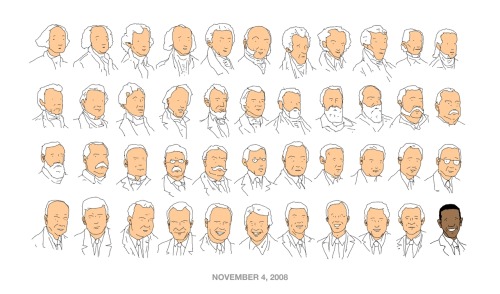
Wednesday, October 29, 2008
Monday, October 20, 2008
News coverage of National Primate Liberation Week
 Protesters slam Yale’s use of primates
Members of the group PETA unfurled a banner downtown Thursday afternoon that said, “Yale Murders Monkeys,” referring to primates the university uses in medical research, then spent an hour peacefully making their point outside Yale University’s Psychiatry Department on George Street.
But not too far away in Glastonbury, Barry Williams, who has Parkinson’s Disease, is thankful every day for such research when done ethically because he has benefitted physically and been given hope from drugs that result from such testing.
“We’re so close to cures in a lot of diseases. ... It would be a shame to stop that,” Williams said. “Obviously, we don’t want bad treatment of animals.”
Williams said there is no other way in some cases than to test medications using animals with systems similar to humans.
Tell that to Justin Goodman, research associate supervisor in the Laboratory Investigation Department of People for the Ethical Treatment of Animals. He was among four protesters who unfurled the sign from a Route 34 overpass while wearing monkey masks.
While the group opposes experimentation techniques on many animals, primates were the focus Thursday as it’s National Primate Liberation Week.
Goodman and his group claim there are more than 160 primates in Yale’s laboratories that, in the name of science, are mutilated, injected with poison, forced to become addicted to drugs and confined to steel cages. He said the psychiatry department at Yale does a lot of the experiments with primates, including injecting their brains with toxins to make them schizophrenic.
“It’s morally unjustifiable,” he said. “They have a right to lead their lives. ... They suffer immensely in these labs.”
He said primates are close to humans in many ways, and that PETA knows of the treatment and numbers by reading studies published by Yale researchers.
Goodman said many federal tax dollars go toward the research.
But Yale spokesman Robin Hogen defends the practice, and said all research involving animals at Yale University is done humanely and in keeping with guidelines.
“This is not about animal rights, it’s about human rights,” Hogen said. “The human use of animals in research is more than justified for the benefits to human kind.”
Hogen said virtually all medical advances of the last century would have been impossible without animal research, including creation of antibiotics, blood transfusions, dialysis, organ transplants and nearly every modern treatment to cure disease and control pain.
“Today researchers at Yale are working on new therapies and diagnostic tools for a broad range of terminal diseases including Parkinson’s, lung cancer, HIV/AIDS, cystic fibrosis, Alzheimer’s and Muscular Dystrophy, all of which rely on animal models,” Hogen said. “Our faculty employ animals only when there are no alternative models for advancing their research.”
He said Yale takes seriously its responsibility for humane care of animals and its laboratories comply with or exceed all federal regulations and independent accreditation standards.
Chelsea Rhodes, a part-time administrative assistant at Yale University and co-founder of Yale Affiliates Animal Rights Network, casts her vote for the monkeys.
“As a Yale employee and New Haven resident, I think people are really horrified,” by the research using animals and tens of thousands of dollars spent on the research, she said. “When it comes to these primates, they’re similar to humans in all ways that matter.”
Monday, October 6, 2008
Delicious Enchilada Casserole
 So, this post seems frivolous after Heidi's last one, but I wanted to share this delicious Mexican Lasagna (Enchilada Casserole) Recipe that I made for dinner last night. One of the things I miss most about living in San Diego is the frequency with which I was able to indulge my appetite for Mexican food (viva Pokez Restaurant!). Mexican food in New Haven is, well, terrible. And this dish satisfied my craving!
I left out the black olives, since Joe hates them, and garnished with Tofutti Sour Cream and fresh cilantro instead. Yum.
Thursday, September 25, 2008
Collectivizing Resistance: Afro-Descendent Communities in Colombian South Pacific Region Plan to Convene for their Rights
September 18, 2008
Collectivizing Resistance:
Afro-Descendent Communities in Colombian South Pacific Region Plan to Convene for their Rights
By Heidi Andrea Restrepo Rhodes
From October 1-4, 2008, nearly a hundred different groups, including national advocacy organizations and community councils, will be represented in Tumaco, Colombia, at the First Assembly of Black Community Councils of the Colombian Southern Pacific Region. The aim of the assembly will be to build solidarities across the region and to facilitate collectively structured forms of participatory democracy in resistance to the daily forms of violence confronted by Afro-Colombian communities. These communities face systematic displacement, arbitrary detainment, extrajudicial killings and massacres. The Assembly has announced that they will convene “toward a consolidation of territory with autonomy and self-government” in the face of state, paramilitary and guerilla aggressions ballasted by the structural racism and historically systematic, institutional marginalization and targeting of Black communities within Colombia. They write, “Despite the situation generated by the armed conflict internal to the country, the Black communities resist annihilation and we continue a permanent labor to recreate life, self-affirmation, and [libertarian] identity inherited from our ancestors.”
In 1993, Colombia instituted Law 70, which recognized the right of Black Colombians to collectively own, occupy, and subsist off of their ancestral lands. Additionally, the law was ratified in order to “establish mechanisms for protecting the cultural identity and rights of Black Communities of Colombia as an ethnic group and to foster their economic and social development…” Almost fifteen years later, according to a 2007 report filed by a delegation from the Rapoport Center at University of Texas at Austin, School of Law, Law 70, though progressive in its aims, has not been upheld by the Colombian State. “[I]ts realization has been hampered by a number of obstacles, including pervasive systemic discrimination.” Included in these obstacles are the infiltration of Afro-Colombian lands by agro-export businesses, tourism mega-projects, and targeting by paramilitary violence- for which the state offers no protection.
A 2002 massacre at Bojayá, where 119 Afro-Colombian civilians were killed, and another 98 injured, left these communities in the wake of one of the worst massacres in 40 years. Despite organizing efforts to demand justice, massacres, disappearances, and forced displacement of these communities are still rampant as effects of Colombian state practices, military funding through U.S.-backed Plan Colombia and violence between factions in Colombia’s internal war.
While estimates put the Afro-Colombian population at between 20% and 70% of the country’s people, of Colombia’s four million internally displaced, Afro-Colombians make up about two thirds, and remain economically among the poorest in the country. The ratification of Law 70 marked a milestone for Afro-Colombian rights as it officially outlawed race-based discrimination and offered Colombia’s Black communities recourse to their rights. That it has not been upheld remains part of the larger network of problematics within the Colombian justice system, particularly as the last couple years have seen the exposure of government-paramilitary alliances.
Plans for the Assembly as part of the efforts to further collectivize Afro-Colombian struggles for rights, arise amid collusions between the Bush and Uribe Administrations to pass the U.S.-Colombia Free Trade Agreement which would allow for further state legitimation of protracted violence against Afro-Colombian communities in the name of economic expansion. Already, Afro-Colombians are forced to reckon with the continued impunity of paramilitary forces in the perpetration of violence against their communities and their allies. For example, in Curvaradó (Chocó), paramilitaries have “violently and illegally usurped” land within Afro-Colombian collective territories, and specifically, “the paramilitary group “the Black Eagles” have been threatening members of the Inter-Church Peace and Justice Commission, a human rights organization that works with Afro-Colombian community council leaders to ensure” that these territories are fully and justly returned to their rightful holders.
To join others in signing a declaration of solidarity with the First Assembly of Black Community Councils of the Colombian Southern Pacific Region, go here:
http://www.petitiononline.com/1BCCC/petition.html
For more resources:
Proceso de Comunidades Negras de Colombia
www.renacientes.org/
Comisión Intereclesial Justicia y Paz
http://es.geocities.com/justiciaypazcolombia/
Article: Why Afro-Colombians Oppose the Colombian FTA
http://www.bilaterals.org/article.php3?id_article=11096
Afro-Colombian News
http://www.afrocolombians.com/Afro-Colombian%20News/Main%20Page.html
U.S. Office on Colombia
http://www.usofficeoncolombia.com/Afro-Colombian%20Groups/
Collectivizing Resistance:
Afro-Descendent Communities in Colombian South Pacific Region Plan to Convene for their Rights
By Heidi Andrea Restrepo Rhodes
From October 1-4, 2008, nearly a hundred different groups, including national advocacy organizations and community councils, will be represented in Tumaco, Colombia, at the First Assembly of Black Community Councils of the Colombian Southern Pacific Region. The aim of the assembly will be to build solidarities across the region and to facilitate collectively structured forms of participatory democracy in resistance to the daily forms of violence confronted by Afro-Colombian communities. These communities face systematic displacement, arbitrary detainment, extrajudicial killings and massacres. The Assembly has announced that they will convene “toward a consolidation of territory with autonomy and self-government” in the face of state, paramilitary and guerilla aggressions ballasted by the structural racism and historically systematic, institutional marginalization and targeting of Black communities within Colombia. They write, “Despite the situation generated by the armed conflict internal to the country, the Black communities resist annihilation and we continue a permanent labor to recreate life, self-affirmation, and [libertarian] identity inherited from our ancestors.”
In 1993, Colombia instituted Law 70, which recognized the right of Black Colombians to collectively own, occupy, and subsist off of their ancestral lands. Additionally, the law was ratified in order to “establish mechanisms for protecting the cultural identity and rights of Black Communities of Colombia as an ethnic group and to foster their economic and social development…” Almost fifteen years later, according to a 2007 report filed by a delegation from the Rapoport Center at University of Texas at Austin, School of Law, Law 70, though progressive in its aims, has not been upheld by the Colombian State. “[I]ts realization has been hampered by a number of obstacles, including pervasive systemic discrimination.” Included in these obstacles are the infiltration of Afro-Colombian lands by agro-export businesses, tourism mega-projects, and targeting by paramilitary violence- for which the state offers no protection.
A 2002 massacre at Bojayá, where 119 Afro-Colombian civilians were killed, and another 98 injured, left these communities in the wake of one of the worst massacres in 40 years. Despite organizing efforts to demand justice, massacres, disappearances, and forced displacement of these communities are still rampant as effects of Colombian state practices, military funding through U.S.-backed Plan Colombia and violence between factions in Colombia’s internal war.
While estimates put the Afro-Colombian population at between 20% and 70% of the country’s people, of Colombia’s four million internally displaced, Afro-Colombians make up about two thirds, and remain economically among the poorest in the country. The ratification of Law 70 marked a milestone for Afro-Colombian rights as it officially outlawed race-based discrimination and offered Colombia’s Black communities recourse to their rights. That it has not been upheld remains part of the larger network of problematics within the Colombian justice system, particularly as the last couple years have seen the exposure of government-paramilitary alliances.
Plans for the Assembly as part of the efforts to further collectivize Afro-Colombian struggles for rights, arise amid collusions between the Bush and Uribe Administrations to pass the U.S.-Colombia Free Trade Agreement which would allow for further state legitimation of protracted violence against Afro-Colombian communities in the name of economic expansion. Already, Afro-Colombians are forced to reckon with the continued impunity of paramilitary forces in the perpetration of violence against their communities and their allies. For example, in Curvaradó (Chocó), paramilitaries have “violently and illegally usurped” land within Afro-Colombian collective territories, and specifically, “the paramilitary group “the Black Eagles” have been threatening members of the Inter-Church Peace and Justice Commission, a human rights organization that works with Afro-Colombian community council leaders to ensure” that these territories are fully and justly returned to their rightful holders.
To join others in signing a declaration of solidarity with the First Assembly of Black Community Councils of the Colombian Southern Pacific Region, go here:
http://www.petitiononline.com/1BCCC/petition.html
For more resources:
Proceso de Comunidades Negras de Colombia
www.renacientes.org/
Comisión Intereclesial Justicia y Paz
http://es.geocities.com/justiciaypazcolombia/
Article: Why Afro-Colombians Oppose the Colombian FTA
http://www.bilaterals.org/article.php3?id_article=11096
Afro-Colombian News
http://www.afrocolombians.com/Afro-Colombian%20News/Main%20Page.html
U.S. Office on Colombia
http://www.usofficeoncolombia.com/Afro-Colombian%20Groups/
Sign Petition!
Sign a Declaration of Solidarity with the First Assembly of Black Community Councils of the Colombian Southern Pacific Region
Wed Sep 24, 2008 8:39 am (PDT)
Hola todos,To sign the Declaration of Solidarity with the First Assembly of Black
Community Councils of the Colombian Southern Pacific Region, please go here
by September 29, 2008. Thank you!
http://www.petitiononline.com/
For more information, see below:
FYI
_____
FIRST ASSEMBLY OF BLACK COMMUNITY COUNCILS OF THE COLOMBIAN SOUTHERN PACIFIC
REGION
Pacific Regional Territory, Tumaco, Colombia - October 1-4, 2008
Toward a Consolidation of Territory with Autonomy and Self-Government
The threats and aggressions against our lives and communities, against our
territories and our rights as human beings and Afro-descendants, have made
us systematic victims of displacement and confinement, massacres and
selective assassination. These actions are part of the strategies of
economic groups, armed actors and political sectors aimed at implementation
of large scale economic projects (in agriculture, trade, mining, tourism,
infrastructure, etc), that have aggravated the humanitarian crisis in our
communities and territories.
These aggressions are framed in deep structural racism, historical
discrimination and voracious, imposed economic models, all of which are tied
to external interests in the ancestral property of black communities, due to
its strategic position. This implies, among other aspects, the deliberate
negation of the contributions of Afro-Colombians toward the construction of
the country in all forms (economic, cultural, social, political and
scientific).
Despite of the situation generated by the armed conflict internal to the
country, the black communities resist annihilation and we continue a
permanent labor to recreate life, self-affirmation and libertarian identity
inherited from our ancestors.
The ethnic authorities, organizations and Community Councils of the Pacific
South, hereby take the historic responsibility to respond to these
challenges in a collective and consensual form. We commit to strengthen
participative democracy through our own organizational dynamics, as part of
this culturally and ethnically diverse country.
Therefore we call ourselves to gather in Tumaco on October 1st, 2nd, 3rd and
4th, 2008. On those days we will celebrate the FIRST ASSEMBLY OF BLACK
COMMUNITY COUNCILS OF THE COLOMBIAN SOUTHERN PACIFIC REGION.
Contact Information: pacificosur152008@gmail.com<
Community Councils and Ethnic Organizations of the Pacific South
Proceso de Comunidades Negras en Colombia PCN
Palenke Regional el Kongal
Palenke Regional Alto Kauca
Palenke Regional Kurrulao
Palenke Regional Kusuto.
COPDICONC- Consejo Comunitario para el Desarrollo Integral de las
Comunidades Negras de la Cordillera Occidental de Nariño y Sur del
Cauca.
Corporación Ancestros C.A.
Cooperativa de Profesionales Afrocolombianos Cooproafro
ASOCOETNAR
Consejo Comunitario prodefensa del río Tapaje
Consejo Comunitario de Unicosta.
Consejo Comunitario El Progreso.
Consejo Comunitario Unión Patía Viejo.
Consejo Comunitario El Progreso del Campo
Consejo Comunitario Manos Amigas del Patía Grande
Consejo Comunitario de Agricultores del Patía Grande
Consejo Comunitario Sanquianga
Consejo Comunitario La Amistad
Consejo Comunitario del Río Satinga
Consejo Comunitario Manos Unidas del Socorro
Consejo Comunitario Unión de Cuencas de Isagualpi
Consejo Comunitario Integración de Telembí
Consejo Comunitario Catangueros
Consejo Comunitario la Esperanza del Río La Tola
Consejo Comunitario el Progreso del Río Nerete
Consejo Comunitario Gualmar
Consejo Comunitario Bajo Río Guelmambí
Consejo Comunitario Alto Río Sequihonda
Consejo Comunitario Odemap Mosquera Sur
Consejos Comunitario la voz de los Negros
Consejo Comunitario Odemap Mosquera Norte
Consejo Comunitario la Nueva esperanza
Consejo Comunitario Alejandro Rincón
Consejo Comunitario la Gran Minga
Consejo Comunitario Nueva Alianza
Consejo Comunitario La Gran Unión Rio Telpi
Consejo Comunitario Renacer Campesino
Consejo Comunitario ACANURI
Consejo Comunitario Cuenca del Rio Iscuande
Consejo Comunitario Rio Chanzara
Consejo Comunitario Bajo Tapaje
Consejo Comunitario Playas Unidas
Consejo Comunitario Esfuerzo Pescador
COCOCAUCA.
Consejo Comunitario Manglares
Consejo Comunitario Mamuncia
Consejo Comunitario Integración
Consejo Comunitario Playon
Consejo Comunitario Sanjoc
Consejo Comunitario Cuerval
Consejo Comunitario San Francisco
Consejo Comunitario Napi
Consejo Comunitario chanzara
Asociación de Consejos Comunitarios de Timbiquí, Konsejo Mayor Palenke el
Kastigo
Consejo Comunitario Negros en Acción.
Consejo Comunitario Renacer Negro
Consejo Comunitario Negros Unidos
Consejo Comunitario Parte Alta Sur del Saija
Consejo Comunitario Patía Norte, San Bernardo
ASOCIACION PARA LA DEFENSA DEL AMBIENTE Y LA CULTURA NEGRA ASOMANOS NEGRA.
RECOMPAS
Consejo Comunitario Alto Mira y Frontera
Consejo Comunitario Bajo Mira y Frontera
Consejo Comunitario la Nupa
Consejo Comunitario Rio Cuanapi
Consejo Comunitario Rescate las Varas
Consejo Comunitario Rio Rosario
Consejo Comunitario Rio Gualajo
Consejo Comunitario Recuerdos de Nuestros Ancestros, Rio Mejicano
Consejo Comunitario Rio Imbilpi
Consejo Comunitario Tablon Dulce
Consejo Comunitario Tablon Salado
Consejo Comunitario Rio Chagui
Consejo Comunitario ACAPA
Consejo Comunitario Veredas Unidas Bien Común
Consejo Comunitario Cortina Verde Mandela
Asamblea de Consejos Comunitarios
CORREGIMIENTO # 8
Consejo comunitario Zacarias
Consejo Comunitario Alto Potedo
Consejo Comunitario de Sabaletas Bogotá y la Loma
Consejo Comunitario Limones
Consejo Comunitario Guaimia
Consejo Comunitario de San Marcos
Consejo Comunitario llano bajo
Consejo Comunitario de Agua Clara
--
AUGUST 2008, FIFTEEN YEARS OF LAW 70 OF 1993
For the right to choose their own future, Afro-Colombians have Law 70/93
Tuesday, September 9, 2008


Friday, August 29, 2008
Goodbye, Summer
Joe started school this week, so we tried to make the most of the long Labor Day weekend with lots of time outside in the sun and a fun day in Central Park! What did your weekend consist of?
A few things that are changing with the season:
1. We sold our car today. We'll be relying on bikes, trains, our own two feet, and Zipcar for transportation from now on. Here's to being more green! Wish us luck. Winter will be interesting, to say the least.
1. We sold our car today. We'll be relying on bikes, trains, our own two feet, and Zipcar for transportation from now on. Here's to being more green! Wish us luck. Winter will be interesting, to say the least.

2. I started working part-time for PETA (People for the Ethical Treatment of Animals), doing vivisection research from home. It's great so far, and fascinating, rewarding activist work.

Monday, August 11, 2008
Stacy's Birthday Month
One of my best friends, Stacy, celebrated her 30th birthday this week, and being done with her PhD prelims (exams). We have been making the most of it!
While the boys were at a bachelor weekend for her brother-in-law Jared, camping in Rhode Island and at the casino, we pulled an all-nighter in New York:

Jimmy was in NY on vacation, so we convinced him to come out with us!

We also went to a Mets v. Padres game, thanks to Brian "Hoops" Schneider (the catcher of the Mets), who Stacy went to high school with and who got us amazing seats behind home plate:


Going out to home plate with our "backstage passes"

On the field
With Hoops after the big win
Afterward, we went to Candle 79, a famous (and delicious) vegan restaurant on the Upper West Side. It was amaaaazing!

Next weekend, the celebration continues when Stacy and I go to Pennsylvania (where she's from)! I'm excited- I haven't been to Philly since high school, and I will finally get to meet Stacy's mom and friends from back home.
While the boys were at a bachelor weekend for her brother-in-law Jared, camping in Rhode Island and at the casino, we pulled an all-nighter in New York:
The Birthday Girl
(people always say we look like sisters)
(people always say we look like sisters)

Jimmy was in NY on vacation, so we convinced him to come out with us!

At Black & White (a bar) with Marco & Laura

We also went to a Mets v. Padres game, thanks to Brian "Hoops" Schneider (the catcher of the Mets), who Stacy went to high school with and who got us amazing seats behind home plate:
Stacy, Timothy (her brother), Jared (Justin's brother), Justin, and Joe


Going out to home plate with our "backstage passes"

On the field

With Hoops after the big win

Afterward, we went to Candle 79, a famous (and delicious) vegan restaurant on the Upper West Side. It was amaaaazing!

Next weekend, the celebration continues when Stacy and I go to Pennsylvania (where she's from)! I'm excited- I haven't been to Philly since high school, and I will finally get to meet Stacy's mom and friends from back home.
Friday, July 18, 2008
Wednesday, July 16, 2008
Hot child in the city...
I spent last weekend in the city with my dear friend Laura after dropping Joe off at JFK on Friday. Here are some photos of my weekend!
Friday night out with Laura and Marco
 I also got to see Aunt Glenda and Marty for a little while on Saturday afternoon. We went to a great hummus place for lunch, and then walked around Central Park for a little while.
Laura & me

Friday night out with Laura and Marco
I also got to see Aunt Glenda and Marty for a little while on Saturday afternoon. We went to a great hummus place for lunch, and then walked around Central Park for a little while. 
Saturday night I went out in NYC with Laura and El. We zigzagged around, from the Lower East Side, to the Meatpacking District, to Union Square, and we had (too much) fun. Here are some photos of our night:
Laura, El, me 
El & me on the subway

Cutting some rug
Laura & me


Here are some pictures of me and the Casartellis when we went wake boarding at the Carlsbad lagoon. We had a lot of fun. it was Paul's first time wake boarding. He did a great job for a first time. He got up after only 2-3 attempts. It was Jimmy's second time wake boarding and although he was hesitant at first because he hadn't got up before, we pressured him into it and we were all happy he decided to try it again because he succeeded this time.
Subscribe to:
Posts (Atom)


